Wednesday, April 16, 2014

Into the Tides book bonus: Dream Powers

Today is a little book-bonus! In posts such as these, I'll give you extra information from my novel that you won't find in the book itself.
The people who know what you're dreaming
(painting by Franz Schrotzberg)

In Into the Tides, people who have magic are called "Powers." Each type of magic has a different set of capabilities, which is based on genetics. And for each Power type, there are 6 different levels of ability, called classes, with 6th class being the weakest and 1st class having the most magic. How a person's class is determined is based on what they can do.

I've been working on creating descriptions that explain what each Power type can do, by class. If you're reading the book and wondering what the characters are capable of, and what they would be capable of if they were higher in class, you can find out!

Today I'm looking at dream powers.

A non-exhaustive list of some

Magic Types

Power

 Class*

 Capabilities/Limitations

Dream 6-
  •  Sense when someone within 20 feet is sleeping
  • See flashes of what a touched person is dreaming
5
  • Sense when someone within 20 feet is sleeping, and the location of sleeper(s);  see flashes of what touched person is dreaming 
  • Speak into a touched person's dreams without awareness (they hear the dream Power's voice but may or may not be able to recognize as not being part of the dream, depending on dream and dreamer)
4
  • Passive: Sense when people within 40 feet are sleeping, location of sleepers, and if the people are well-known the identity of sleepers; see flashes of dreams from person dreaming within 10 feet; accidentally (occurs randomly and without focusing) share dreams if touching another person when sleeping; perfect dream memory (always remembers own dreams)
  • Active: speak into a touched person's dreams with selective awareness (dream Power chooses if the person knows that the voice is not part of the dream); view full dream of a touched sleeper
 3
  • Passive: Sense when people within 60 feet are sleeping, location of sleepers, and if the people are well-known the identity of sleepers; see flashes of dreams from person dreaming within 20 feet; accidentally (occurs randomly and without focusing) share dreams if touching another person when sleeping; perfect dream memory (always remembers own dreams); view full dream of a touched sleeping person
  • Active: speak into a touched person's dreams with selective awareness (dream Power chooses if the person knows that the voice is not part of the dream); visually input images into dream (dreamer sees chosen image) with selective awareness
2
  • Passive: Sense when people within 80 feet are sleeping, location of sleepers, and if the people are well-known the identity of sleepers; see flashes of dreams from person dreaming within 40 feet; share dreams if touching another person when sleeping OR choose to block dreams (choose before going to sleep; sees no dreams while sleeping if this choice is made); perfect dream memory (always remembers own dreams); view full dream of a touched sleeping person
  • Active: speak into a person's dreams with selective awareness within 10 feet; visually input images into dream with selective awareness; remake dream (dreamer sees and hears exactly what dream Power chooses)
1+
  • Passive: Sense when people within 100 feet are sleeping, location of sleepers, and if the people are well-known the identity of sleepers; see flashes of dreams from person dreaming within 75 feet; share dreams with up to 2 people within 20 feet when sleeping OR choose to block dreams; share dreams with up to 5 people if all are touching; perfect dream memory (always remembers own dreams); view full dream of a person within 20 feet
  • Active: speak into up to 3 peoples' dreams with selective awareness within 10 feet; visually input images into dreams with selective awareness; remake dreams (dreamers see exactly what dream Power chooses); combine dreams so that all people are sharing a dream

Dream Powers are considered a somewhat military magic. Typically they're used as scouts or for infiltration, because knowing that someone is sleeping nearby can determine the presence of others. Furthermore, a well-disguised dream Power can harass enemies by preventing them from gaining a good night's sleep, disrupting them with nightmares. However, sharing the actual details of another person's dream (enemy or ally), except in the cases of shared dreams or with special consent forms, is considered a war crime.

Dream Powers may also be useful for communication purposes, being able to talk to sleepers, but the distance limits prevent them from being extremely effective, and unless the dreamer has a way of verifying that the speaker wasn't a product of their own mind, relying on communication via dreams can be unreliable. There have, in fact, been cases of armed forces attacking at the wrong time due to commanders assuming their own natural dreams were communication by dreamers, or thinking an actual communication by a dreamer was a dream. Therefore, dreamers have been pretty much historically removed from the lines of communication. The exception is controlled shared dreaming, which is used when overworked allies need time to both communicate and rest. Because a dream Power's shared dream does not disrupt normal rest, and the dreamer can fully remember everything that occurs or is decided in the dream, trusted first class dream Powers may sometimes be used to help leaders maintain full sleep cycles and plan strategy.

Out of combat, dream Powers often work as psychologists, helping war veterans regain a sense of stability and enabling them to deal with nightmares. They can also redirect or even prevent bad dreams via strategic uses of their Powers. As such, hospitals, mental wards, and trauma centers staff themselves with dream Powers as much as possible; and most city headquarters for Power registration host regular clinics for dealing with night terrors. Dream Powers who choose to take the occasional side job, with proper paperwork, occasionally hire themselves out to private individuals plagued by normal nightmares, or those who desire something unique and fun.

Because of privacy laws and the nature of the subconscious, what a dream Power sees in a dream is inadmissible in courts, and is considered private property of the dreamer except during exceptional circumstances. Dream Powers are required to take yearly courses in maintaining confidentiality, and those found to have improperly revealed the contents of a dream are prosecuted by laws and fines. Dream Powers are forbidden from publishing or most forms of art, both by law and by practicality, which protects them from lawsuits and prosecution. However, storytelling is a common hobby during private social gatherings, so long as no exact source may be pinpointed, and roleplaying games are quite popular.

Shared dreaming is typically as random as normal dreaming and is usually outside the dream Power's control. Unlike dream viewing, the Power is asleep, and wakes fully rested from the shared dream. High level Powers (third class and up) may be able to influence the dream, especially if they are trained in lucid dreaming (and most are), but on the whole the dream is fully at the control of the dreamer. They may appear either as themselves or as a random character in the dream; lucid dreamers usually maintain a sense of self and the understanding that the actions they take are under the command of the dreamer. Since fighting the will of the dreamer rarely yields results, the most common quote dream Powers use is "Just go with it."

Dream Powers do not typically suffer mental scarring from even the most disturbing shared dreams; it is thought that their magic buffers against negative psychological experiences. In fact, they are typically considered more mentally stable than most other people, and those with family histories of schizophrenia or other psychological illness are virtually immune themselves. They also have high resistance to mind-altering drugs. Several schools of thought hold that the ability to see worst and most embarrassing parts of peoples' subconscious thoughts enables them to better deal with the dark sides of their own mind, and also helps them distinguish between reality and hallucination.

That said, dream Powers usually have difficulty being accepted by those who are not dream Powers, as many people are uncomfortable with the idea of their dreams being "overheard" by others. In various cultures throughout history, they have been consulted as visionaries, wisdoms, or oracles; yet even when revered they were often isolated.

Monday, April 14, 2014

Books I grew up with

Every fan has one: the book that drove them into fantasy, the book that first addicted them to the genre.

Today I thought I'd share some of the books that first got me reading sci-fi and fantasy. Because I was a slow reader to begin with, I didn't really explore the genre until late elementary and early middle school
Junior Jedi Knights
On Goodreads

Late elementary:

  • The Animorphs. Yep, I read each of these up until... I think about book 30. I think I aged out of the target range about then, because they started losing their appeal. 
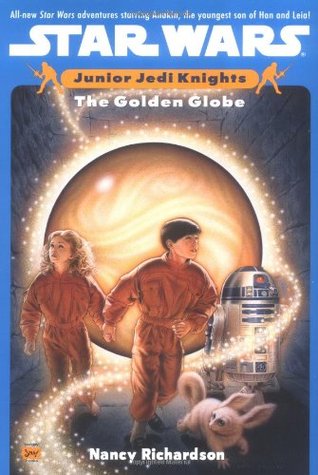
  • Star Wars: Junior Jedi Knights. I'm surprised how few people heard of these, but they were my gateway into the Star Wars extended universe. 

On the whole I mostly missed the fantasy boat in elementary school. I have a bunch of friends who read Tolkien in 3rd grade, but nope, not me. I was still in Boxcar Children and Sweet Valley at that point. What can I say? My middle school years were pretty great, because I got to catch up on the good books all my friends had enjoyed before me.

Middle School:
Probably better
than Galaxy of Fear,
but I'll never know.

  • Dragonsong, by Anne McCaffrey, and the sequels. Menolly's series captured my heart, and I must have read and re-read this trilogy a dozen times or more. 
  • Star Wars: Young Jedi Knights. I moved straight from the juniors, featuring young Anakin and Tahiri, into the stories of their older siblings Jacen and Jaina. 
  • Tamora Pierce's Song of the Lioness quartet. Finding a fantasy book with a female hero just plain rocked. The fact that Pierce is an amazing writer helped, too. These I've re-read many times and always enjoyed.
  • Everything else by Anne McCaffrey. I dipped my feet into the waters of Pern and came back addicted, so I started reading the rest of her series. Didn't finish until high school, but hey. I gave it my all.
  • Best thing EVER.
    Young Jedi Knights
  • The Star Wars Galaxy of Fear books. Really, you don't know what you're missing. And chances are, you missed these. They were THE BEST THING EVER.* (*Warning: may be better in my memory than in real life. I refuse to re-read them and shatter my illusions, because I have... suspicions about whether or not they'd stand the test of adulthood reading.)


High School:
On Goodreads.

  • The Star Wars extended universe (yes, you know it was leading here). The Corellian trilogy was the most re-read set; loved them and read them until they all but fell apart. 
  • The Belgariad by David Eddings. I re-read these recently. Should never have done that; my happy childhood is now dead. They're not bad; they're just... Let's just say some books can't possibly live up to their memories.
  • Everything else by Tamora Pierce. And I still read anything new she puts out, too. (Anyone who touches my signed copy of The Will of the Empress will die a thousand deaths. No, really; MINE.**)
  • Jody Lynn Nye's Waking in Dreamland and The Magic Touch, and then anything else she touched, because I loved her voice.
  • Mercedes Lackey's Owl Knight series, set in Valdemar. Then her other series. Every. Single. One. (You'll pry my signed 500 Kingdoms books out of my cold, dead hands. Never mind; I'm taking them with me.**)
    The cover of
    my edition.
  • Patricia Wrede's Dealing with Dragons series. Everyone else read them in middle or even elementary school. I won't lie; I envy them those extra years of knowing this quartet.
  • Robert Asprin, whom I first discovered through books he co-wrote with Nye. It's a good choice.
  • Terry Brooks' Shannara books. I started with the WishStones, three books I found at a reseller, and binged my way through everything else that was out at the time. They started getting depressing, though, so I slipped out of them for lighter and easier reads. 
  • Robin McKinley's The Blue Sword and The Hero and the Crown. I fell in love with these and have stayed in love them ever since, no matter how many times I re-read them. If anything, they've improved with time.
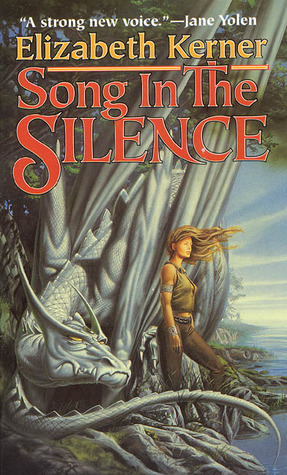
  • Elizabeth Kerner's The Song in the Silence. Loved this book. Loved it so much I listed it as my absolute favorite for the next ten years or so. The sequels, when I found them, did not quite live up to the first book, though. Good but not lifetime-favorite good.
  • Well, I loved it.
  • Rosemary Edgehill's The Sword of Maiden's Tears. I got this as a gift one Christmas the year it came out. Didn't think I'd like it. Then I read it. Unfortunately, the series was left discontinued; after years of searching I finally found the next two, but that's all that were ever printed. (sniffle)

After Pern, I pretty much started working my way through the Sci-fi/Fantasy section of the library, so there's a lot of books I've missed on this list. But these were the major staples of my reading youth, the best memories and the ones I've kept with me longest. With these under my belt I've never doubted that fantasy and science fiction are my genre of choice. Of course, there are a lot of sub-par books that I came across, books that made me gag and want to throw out the genre as a whole. But then I just picked up one of my favorites and was hooked all over again.


What are some of your old favorites, the books that helped hook you into your favorite genre?

(**Note: author has been known to show signs of dragon-like tendencies over signed books in the past.)

Friday, April 11, 2014

Different views on how much writers make

How much will you make from writing?

There are many different studies at what authors are earning right now. I thought, for convenience's sake, I'd put the ones I've seen recently together, so you can get a look at different perspectives. Note that many of these surveys have wildly different results, and even similar ones have different conclusions.

Brenda Hiatt's Show Me the Money (last updated 7/13)--shows the advances and royaty rates paid from various YA and romance publishers, including the big 5, from a voluntary, anonymous survey. Edit: Also, her Show Me the Money for indie authors (last updated 7/14).

Beverly Kendall's self-publishing survey (covering 2013; posted 1/14)--looks at income of authors, analyzing in a number of ways, including by number of books, by cover/editing (pro vs nonpro), traditional vs small pub hybrid vs big pub hybrid, and more

Hugh Howey's 7k Report (published 2/14; covers and analyzes the earnings from Amazon's top 7000 earning authors of all types, from a single day); his 50k Report (published 2/2014; covers and analyzes earnings from Amazon's top 50,000 authors, from a single day); and his Barnes and Noble Report (published 2/2014; covers and analyzes earnings from 5400 B&N's top authors). Edit: His July 2014 report and B&N report; his January 2015 report. The October 2015 report looks at a variety of markets. And a report looking at debut vs tenured author incomes. For simplicity's sake: the Author Earning's website. There are a lot more reports posted than I've listed here.

Digital Book World's paper, which stated most self-published authors earned less than $1000 a year, and GalleyCat's breakdown of the data (actual survey requires purchase and costs $295). Data analyst Beth Weinberg from Digital Book World analyzes the survey (posted on 2/14).
Added 1/29/15: Digital Book World posts another report, covering 2014, stating that most indie authors (percentage-wise) earn very little (but there's a huge data spread).

Traditionally published author Jim Hines publishes his own income for 2017 (posted 1/2018), 20152014 (posted 1/2015), 2013 (posted 1/2014) and for 2012 (posted on 1/2013). Hines also surveyed 400 authors about their incomes in 2016. Author Mark Lawrence posts on Reddit about what he makes (posted early 2013). Author Brian Keene writes a blog about what his own income is and advice on what writers can expect to earn (posted 1/2013) (All three authors are traditionally published fantasy authors.)

Edit 5/1/2014: Author Patrick Wensink shares his income from his best-seller.

The RWA does an annual report on how much romance, and other genres, earn as a whole.

Edit 7/10/2014: The Authors Licensing and Collecting Society, a United Kingdom-based association, publishes an article on the decline of professional authors' incomes as compared to 2005. However, as with all articles posted, this article has critics.


To be fair, all the links have critics. This may be at least partially explained by the fact that the reports contradict even one another, all have different viewpoints and therefore different biases, and focus on different segments of the publishing population. In short--analyze and weigh the evidence with a critical eye, and be prepared to make your own judgment. 

But there is one thing they all agree on: Writing isn't lucrative for every author. It's only your chances of making good money and your maximum potential earnings that vary among the reports.

Last update to this post: 11/9/2015

Wednesday, April 9, 2014

Into the Tides book bonus: Interview with Michael Holskerski on strength Powers and eating disorders

In Into the Tides, one of the main characters, Derik, is a six-class strength Power. In the Broken Powers world, strength magic is accompanied by an increased metabolism. 

Three years before Into the Tides began, magic poured over the American South, and everyone in the area was lost, including most of Derik's family. His uncle, living in Boston as a gym owner, survived. Together they worked to live with the grief of losing their family members.

Derik, in the book, talks about some of the health problems strength Powers face, including what happens when a strength Power develops an eating disorder. While Into the Tides is a fantasy world, eating disorders are a real problem, and have the highest mortality rates of any mental health problem. In the past decade, the rate of eating disorder diagnoses has increased in both men and women.

For more information about eating disorders in men, and where to find help if you or a man you know may be dealing with an eating disorder, check out the National Eating Disorders Association's page for men; to find more information for both men and women, check out the main page.

-------------------------


Local Madison resident Derik Holskerski
(sixth class strength Power)
Boston gym owner Michael Holskerski,  personal trainer and a sixth class strength Power, joins The Daily News reporter Sandra Collins to talk about the underlying health problems strength Powers face.

COLLINS: Sometimes we all wonder what it would be like to be just a little bit magical. But as great as it may sound to be able to life a couch by yourself, being a strength Power--the most prevalent magic type--may be a mixed blessing.

Joining me today is Michael Holskerski, a sixth-class strength Power taking a day off from helping his nephew open a gym in the city. He'll talk about the downside of his magic. Michael, what's the first thing that stands out to you about strength magic?

HOLSKERSKI: Hello, Sandra. Thanks for having me in today.

I think the first thing that comes to mind for most people is, of course, what's usually hailed as the major limiting factor in the spread of the genes for strength magic. I come from a family with a range of classes; my parents were second class and fourth class. Three guesses which is which.

COLLINS: Well obviously, your mother must be the fourth-class.

HOLSKERSKI: Exactly. Strength magic is tightly linked to our extremely high metabolisms, and the stronger the magic, the higher the metabolism. Therefore, maintaining high enough levels of body fat to bear a child is difficult for women with higher levels of strength magic. Of course it's not impossible, with women with a long family history of high but healthy slenderness having the best chances; but the risks are higher and complications are frequent. These days it's generally advised for women with higher classes who want children to use surrogates. But historically that wasn't a choice, and since most high-class female strength Powers run around 12-16% body fat if they eat enough, childbearing usually wasn't an option. Strength-Powered bodies tend to keep just enough essential fat to survive, but not much more.

COLLINS: Women aren't the only ones who face problems, though.

HOLSKERSKI: Not by a long shot. Men are also less fertile, producing nearly a third fewer children on average than unPowered men. Plus, later in life they have a higher than normal chance of developing testicular cancer, which is why doctors recommend they begin regular exams at age thirty.

COLLINS: You say gender-specific; does that mean there are troubles that affect both genders equally?

HOLSKERSKI: Here's a factoid for you: being underweight is, pound for pound, at least as dangerous as being overweight. Forget the warrior stereotype of dying in battle. Heart disease and organ failure are, and have always been, the leading causes of death in strength Powers. Again, this goes back to metabolism: you can feed a person and half on what a sixth-class Power eats; but you can feed eight people off what a first class eats. So when food became tight or prices rose, often strength Powers felt the pinch the most; and in times of starvation, often only a very small percent of strength Powers were kept at full rations.

Even beyond that, we're also highly susceptible to osteoporosis in older age, since fat plays a role in keeping bones strong. Our magic does help prevent early-onset osteoporosis, since it strengthens the bones to support muscle development; but that advantage is lost in the 60s. Immune problems are also a life-long issue, and plagues often hit strength Power populations hard. Our magic doesn't actually mean we need less fat than other people; it just means we have less.

COLLINS: So let's talk eating disorders. While those have been a deadly factor for a long time, since the Tides hit two and half years ago, they've been on the rise--well, even more so. Are strength Powers less likely to be affected, given the information that's out there on how dangerous not eating is?

HOLSKERSKI: (throat clears) If anything, it's worse than ever. (Pause.) You'll have to forgive me; most of my family was stationed at Fort Bragg, in North Carolina.

COLLINS: I'm sorry for your loss.

HOLSKERSKI: Yes, thank you. (throat clears again) Depression is always a factor in personal loss. It's no secret that most of the fifth-class and higher strength Powers are in the armed forces; and that some of the largest bases were located in the South. So of those who are left, most of us are dealing with the loss of our families.

Eating disorders are one of the many ways people act out in grief or as symptom of depression. While for the unPowered it's a serious problem, for a strength Power the time table towards fatality is accelerated enormously. You know how, when the body doesn't have enough fat to burn, it burns muscle?

COLLINS: Yes.

HOLSKERSKI: For a strength Power, the body prioritizes voluntary muscle much more than it should. So it turns to organ cannibalization very quickly. A low-class strength Power can, without exercise and by maintaining a high-calorie diet, conceivably build up stores of fat. However, even a sixth class is likely to have low body fat, because they build muscle more quickly, which increases metabolism on its own. That's in addition to the magically fast metabolism.

COLLINS: So in other words, the more a strength Power works out, the faster their already accelerated metabolism burns fat. And the less fat a person has, the quicker the body begins eating muscle, including vital organs.

HOLSKERSKI: Yes. So you see, it's a very deadly disease.

COLLINS: Is there a cure?

HOLSKERSKI: Therapy and physical treatment together can put a person on the road to recovery. There's no magic wand for eating disorders that makes them go away overnight, though. No pill, either.  Magic may fix some of the physical symptoms, but continuing treatment and support is vital. That's for anyone with an eating disorder, mind you, and not just someone with magic.

COLLINS: Thank you for your frankness with this serious issue. And thank you for joining us today.

HOLSKERSKI: My pleasure. 

Monday, April 7, 2014

Monday morning mobility mire

This morning I laid in bed for nearly an hour after the alarm went off, staring at the ceiling and cursing the big windows I usually love, because they kept letting in the cold air. With two kitties snuggled up against me, demanding I stay still and continue to warm their bed, and 4 blankets keeping me comfy, I wasn't eager to rise.

Finally I dragged myself out into the chill, quickly threw on clothes and forced myself through the morning routine. Went downstairs and found my roommate on the sofa, snuggled up with her troll-dog.
He's a good snuggler. And equally un-enamored by
Monday mornings.

"I had to take a morning nap," she said.

Apparently, it's just one of those Mondays.

Clearly, I need some motivation to get myself moving.

Therefore, I plan to try out some Sencha Jade Reserve this morning, a new tea I got over the weekend from Teavana. No time before I leave the house, though, so I'll have to do my first brewing of it at work. Rather excited to try this one.

What are you looking forward to this Monday morning?

Friday, April 4, 2014

Publishing Industry News

This week's publishing news and industry blogs covers 3/22-4/4.


Publishing News

The Vatican plans to digitize 82,000 rare manuscripts from their library and make them available online. (Sorry, that might have been my geek-girl squee of delight you just heard.)

(US public domain image)
While in the US, the DOJ has slammed down agency pricing, in Canada Kobo has asked for and been granted a temporary stay that would allow publishers to continue using agency pricing based on the fact that Kobo can't afford to bear the costs of trying to compete with Amazon's ability to absorb the cost of steep discounts.

The Authors Guild legal counsel testifies before the House subcommittee on Courts, Intellectual Property, and the Internet that perhaps the solution to digitalization of orphan works is a collective licensing agreement; and also that orphan books are rare and it's actually usually easy to find authors.

Judge Cote approves class status and also denies two of Apple's expert witnesses for the upcoming consumers vs Apple damages trial. The damages from the DOJ vs publishers have now been released to consumers. Meanwhile, retailers begin to another class-action suit, under claims that Apple's agency pricing hurt them.

Barnes and Noble discloses that, as part of its agreement with Microsoft, it now has the option to not develop the Nook but rather to allow Microsoft to support the device through Microsoft-branded readers, apps, etc.

The New York Public Library has released a book recommendation engine to help readers find new books they'd probably like.

In the UK, book donations to prisons have been banned except by public libraries. Authors fight the ban.

Dropbox has acquired social reading site Readmill and has shut down the site, incorporating the Readmill staff into the Dropbox team.

In an April Fools hijink, Reddit decided to "ban discussions" on certain books--of course, this was complete baloney, because it was an April Fools joke.

The publisher Verso begins to sell books directly to consumers.

(Not exactly publishing, but may have an affect due to the number and breadth of companies involved:Major Silicon Valley companies have been caught in a no-employee-poaching agreement that's been keeping wages down for tech workers. Now they're facing a class-action suit.


Industry Blogs


QueryTracker's Publishing Pulse for 3/28.

Rosie Genova from QueryTracker offers the down-low on what some agents are currently looking for.

Are you a poet? Has someone offered to be your agent? Victoria Strauss on why you should run away screaming (and clutching your wallet). Also on Writer Beware, Entranced Publishing popped up, had trouble paying its authors, sold itself, and decided it didn't want to do publishing anymore and so closed down and gave the rights back to authors. And if you hear about WordWorks Publishing Consultants, and any of their pretty wide-ranging lists of endorsements... er, those "endorsements" were outright plagiarized from other, more reputable agencies, organizations, and not-WordWorks groups.

Author Nathan Bransford offers analysis of his recent sales. Amazon dominated the e-book market, but the print has been outselling the e-book.

Kristine Kathryn Rusch posts more in her Discoverability series: Part 14 (When you should promote/how to decide which work to promote); Part Surprise (be surprising and don't be surprised when you attempts to copy someone else's unique tactic don't produce the same results); and Part END (Measuring the results of your promotions).

Agent Janet Reid answers questions and gives advice. I have a piece pending publication; how do I mention it in my query? (I'm publishing x in x magazine, which will come out in date, plus what not to say). I live in another country; should I mention this in the query? (Nope. It'll come out eventually, but at the digital query stage, the agent doesn't need to know where you are.) Do I really need to aim for no more than 250 words in a query? (Yes, that rule still applies.)

And more advice and answers from Reid: Don't query several books at once for the same agent. Do you need to call non-YA/MG/Children's/NA Sci-fi "adult sci-fi"? (No, unless specified otherwise, the default is adult.) Do non-AAR agents always mean trouble? (Some good agents are not members of the organization, but be sure to do your research.) I had last-minute inspiration and rewrote after sending the query. Should I withdraw it? (No. If you get a request, then inform the agent.) If I have two manuscripts in different genres, can I go with two agents at the same time? (No; the agent who reps one will want to see the other.) If you're an older writer, should you just not bother with agents? (If you want an agent, then query agents. Just don't mention your age in queries; what matters is if you can write, not how old you are.)

A reader and a writer, Pippa Jay talks about 5 things she looks for in a science fiction romance on the Futuristic, Fantasy, and Paranormal blog. And author Sharon Kay talks about using minor characters to bring life to your story.

GalleyCat shares InkHouse's infographic "How Americans View and Share News."

Wednesday, April 2, 2014

Into the Tides book bonus: Illusion Powers

Today is a little book-bonus! In posts such as these, I'll give you extra information from my novel that you won't find in the book itself.
The magic that can make pretty,
trippy images for everyone--
but only off the clock. On the clock,
they tell you when someone else is
seeing things.
(image from here)

In Into the Tides, people who have magic are called "Powers." Each type of magic has a different set of capabilities, which is based on genetics. And for each Power type, there are 6 different levels of ability, called classes, with 6th class being the weakest and 1st class having the most magic. How a person's class is determined is based on what they can do.

I've been working on creating descriptions that explain what each Power type can do, by class. If you're reading the book and wondering what the characters are capable of, and what they would be capable of if they were higher in class, you can find out!

Here's more about illusion Powers, which are referenced in Into the Tides but never really make a full appearance. Illusion is a fully mental Power, unlike any of the previously listed magic types.

A non-exhaustive list of some

Magic Types

Illusion 6-
  • Passive: Vague feeling when someone sees something differently (frequently acts up for things such as colorblindness, looking in a different direction, finding something accidentally lost, etc)
  • Active: Shift own perception of color [see a different color] or sound [hear sounds in a different tone or at a different decibel level]; shift 1 person's perception of the color of a small object with awareness (they know the color is incorrect; effective regardless of willing or not. Does not affect technology.)
5
  • Passive: sense if someone else nearby is seeing something differently (a 'feeling,' often described as a tickling in the gut, that a person within 10 feet is seeing the same things you are but in a different color or shape, or sees something hidden. Does not reveal what, but gut feeling gets stronger closer to the person who is seeing the thing differently. Only occurs for magic or when viewer believes something has been deliberately camouflaged)
  •  Active: shift own perception of color and sound; shift another willing person's perception of color and sound to the same degree; distortion on small objects with awareness (shift the color of an object or sound; slightly shift the shape of the small  [1 inch or less] object)
4
  • Passive: gut feeling if another person within 10 feet sees something different; ability to see through a willing person's eyes when touching them
  • Active: shift own perception of color and sound; shift up to 4 willing people's perception of color and sound to match (people must be within 20 feet); distortion on medium-sized objects with awareness for up to 3 people; shift universal color of small object with awareness (anyone looking at it will see a different color as long as illusion Power focuses, but will know the color has been altered); create small images on a blank surface for people within 10 feet of Power; remove a willing person's ability to see (until the illusion Power stops focusing)
 3
  • Passive: gut feeling if another person within 10 feet sees something different; ability to see through a willing person's eyes when touching them (must close own eyes)
  • Active: distortion for self; distortion for up to 10 willing people (people must be within 30 feet); distortion on medium-sized (up to 5 inches diameter) objects with awareness for up to 8 people; universal color or shape shift of an object up to 5" with awareness; create sound and images on blank surfaces for up to 10 willing people within 10 feet; remove another person's ability to see (duration: as long as focus if willing; usually around 2 minutes if they're unwilling); remove 3 willing peoples' abilities to see
2
  • Passive: gut feeling if another person within 10 feet sees something different; ability to discern approximately what is different (the area that looks different, but not what is different about it); ability to see through a willing person's eyes (distance limit 1 mile) without losing own vision
  • Active: distortion for self; distortion for up to 10 willing people (people must be within 30 feet); distortion on medium-sized (up to 5 inches diameter) objects with awareness for up to 8 people; universal color or shape shift of an object up to 5" with awareness; create detailed sound and images on blank surfaces (images are translucent) for up to 20 willing people within 50 feet; create detailed sound and images for 1 person within 10 feet without awareness, willing or unwilling; remove sight for up to 10 willing people or 5 unwilling (apprx. 10 minutes)
1+
  • Passive: gut feeling if another person within 100 feet sees something different; knowledge of what looks different and how; ability to see through another willing person's eyes regardless of distance
  • Active: distortion for self; distortion for up to 100 willing people (people must be within 100 feet); distortion on objects up to 5 inches diameter without awareness for people within 40 feet of illusion Power (viewer is not aware that anything is different about object); universal distortion on objects up to 4 feet across with awareness; create detailed sound and images (images are opaque; with awareness; willing or not) on any surface for up to 40 people within 100 feet; create detailed sound and images for up to four people within 20 feet without awareness, willing or unwilling; remove sight from up to 40 willing people or up to 10 unwilling (average duration: apprx 1 hr); extended hallucination (willing person may continue to see/hear hallucination for approximately double the length of time that illusion Power was focusing)

Illusion Powers, like music Powers, are often employed in investigations, and are also used in intelligence operations. While higher class illusion Powers could conceivably play movies for their friends (and occasionally do in their down-time), the rarity of high class Powers means they don't do so professionally. However, they have been known to occasionally moonlight during vacations for extremely wealthy clients who are willing to pay outrageously for the experience of a 3-D movie. Such things require official approval (with lots of paperwork) and the government usually takes a cut through a high tax on the experience, but those illusion Powers who do so have been known to make a good vacation/retirement off the deal.

Technology, it is important to note, is not affected by illusion Powers. Because this is a mental Power, it affects the brain's interpretation of input; thus, brainless organisms are unaffected. More intelligent organisms with sophisticated brain structure are usually equally affected as humans, including most mammals and lizards; but those with less sophisticated structure or more alien metal structure, such as squid, insects, and plants, are not affected at all.