Showing posts with label tea. Show all posts

Tuesday, August 10, 2021

Coding and a Cuppa: the similar flavors of programming and tea

Today started with a Taiwanese black tea to smooth over a too-early morning, steeped twice, and progressed into a gentle pomelo oolong to ease a brewing headache. I've been a lover of teas since my teens, and like many tea-drinkers, my tastes have changed over time, with both my palate and my knowledge expanding over the years.

Coding is much newer to my life. Though I first learned HTML and some CSS as a teen, I began learning Javascript last fall, and graduated a coding bootcamp (the Grace Hopper program at Fullstack Academy) last month. During the process of learning to code, I found many parallels between my tea journey and my coding journey.


Tea requires patience, and some degree of precision. Steeping doesn’t hurry just because you are in need of a caffeine fix! It’s like waiting for your code to compile; the wisest course of action is to just wait. Compiling can’t be rushed, but like how tea steeped too long or with too-hot water becomes bitter, errors can make your code unpalatable to the compiler. But both are surprisingly flexible, too--code can be written many different ways, just as tea can be brewed hot, cold-brewed, brewed stronger with more leaves, re-steeped many times, made with milk and sugar or lemon and honey, or more! 


Speaking of a multitude of choices, programming comes in a variety of languages and libraries, just as tea comes in different forms. Java or Javascript, Kotlin or C#; React or React Native, Firebase or Postgres--the oolongs and green teas and black teas, the fruits and flowers and spices we add--some people love them all and try many; others have a favorite they specialize in. 


CSS and React working together

In teas I tend towards diversity: I love oolong and black and green and pu-erh and white and herbal. However, I am not usually a huge lover of rooibos. At least, not to drink plain. I have a special love for Harney & Sons rooibos chai, of which I always keep a tin for my cinnamon-chip chai cookies! In the same way, there are parts of coding I’m less a fan of than others--but as I gave rooibos a chance and found a place I loved it in, I find I really appreciate ‘the chores’ of coding as they enhance the project as a whole. Writing API routes, for example, is less fun to me than crafting the user experience with a beautiful and responsive frontend; but without routes, there couldn’t even be a frontend! And it’s the many routes that let a user interact with a site, bringing it to life and giving substance to the app. On their own, API routes are not my cuppa; but with the butter and cinnamon chips of a full stack web app, they’re an essential ingredient of something I love, and therefore something I want to invest in.


I might find more fun in UIs than APIs, but that doesn’t mean everyone is the same. And I’m glad of it! I’m not afraid to pair-program with a teammate whose enthusiasm for routes turns the process from an important task to something a little more fun. And if they’re less than happy to be digging into the details of flexbox, I won’t judge, even if I could use a little more flexbox time myself. Everyone has different tastes, and there’s nothing wrong with having preferences. I never liked Lipton’s sweet tea--but for some people it’s a heaping teaspoon of sweet memories, or just lands on the right tastebud. 


For that matter, if I’m trying to get someone to try tea, and the only tea they’ve liked so far is Lipton’s sweet tea--you better believe I’m glad they liked it, even if I don’t myself, because getting into any tea is an entry point from which people can learn to love other teas! Maybe in a couple years, I’ll have helped them grow their tastes to include Cinnamon Spice, or a sweet chai, or a boba tea, or anything else that we can enjoy together. Meanwhile, drawing people into coding may start with taking something they’ve enjoyed before--like designing print layout or routing calls to the right people--and helping them see the similarities until they understand the coding challenge, and then appreciate it, and then love it for itself.


Growing an appreciation of new teas takes time, and so does learning new parts of coding, but both are worth it. I’m always eager to try a new tea, and I can’t wait to dig into new languages and new libraries. Whether I’d love coding as much as I do without first learning to love tea is up for debate, but one thing’s for sure--a good day’s code starts with a good cup of tea close at hand!

Wednesday, October 26, 2016

Oriental Beauty Tea and Tea Farm Visit

Missed Friday and Monday's posts due to being in Taiwan. Great vacation! Also, the tea was amazing. One of the things we did there was visit the tea museum at a tea farm, and at the end of the museum visit, we got to enjoy a couple of tastings.


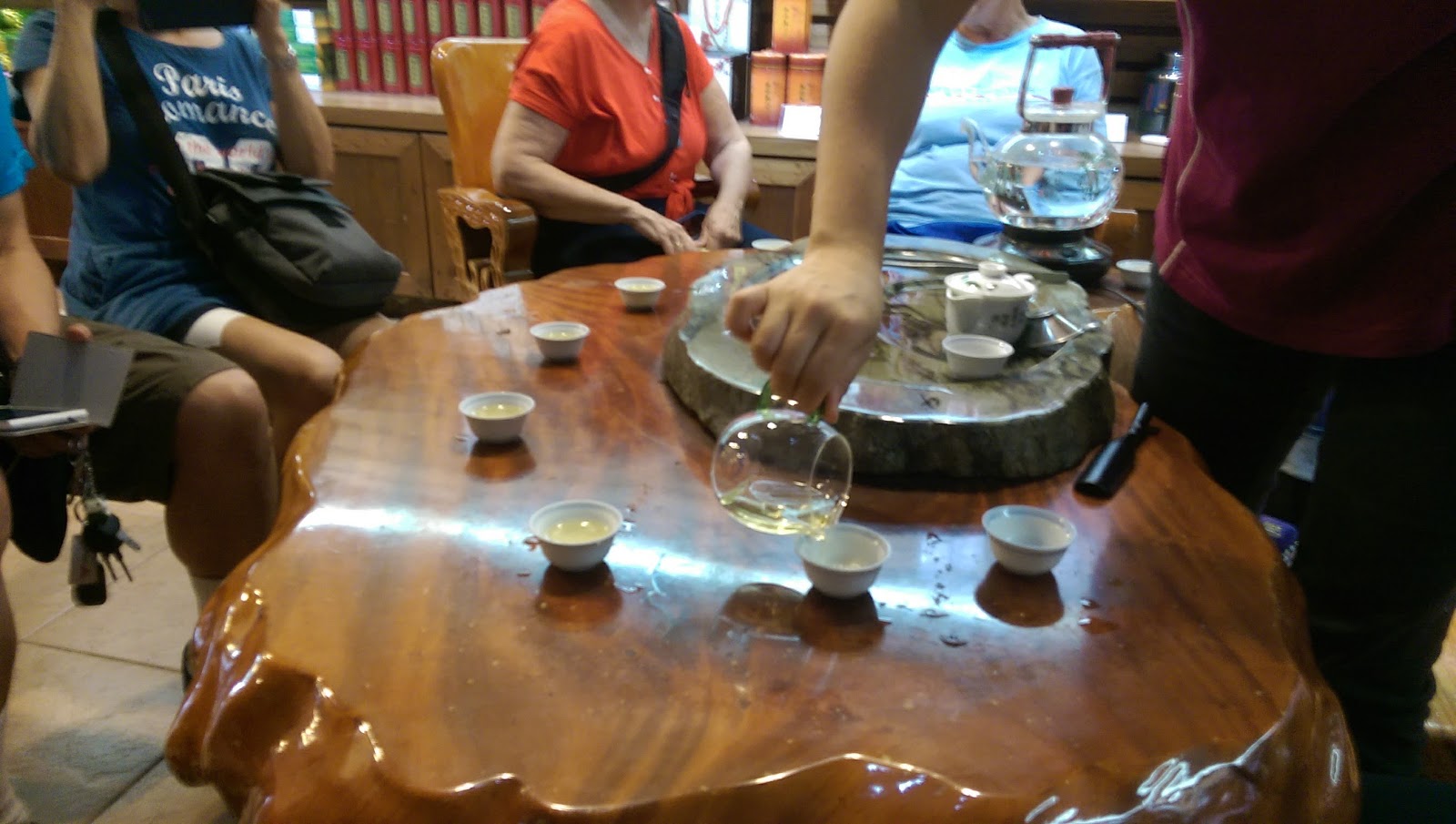
 First there was the teacup warming, where she poured hot water into the pot and cups.


Then she added the water to the tea, pouring from high to let the water cool down before it touched the Oriental Beauty tea. The unique flavor of the tea is produced by the insects that nibble it, starting oxidation while still on the branch.


Then she poured out tea into sample-sized cups, and rebrewed the leaves.


 The tea is a beautiful honey color, which is also the flavor that develops, a fruity-honey flavor.
 For our second tasting, we enjoyed a high mountain oolong.
The shop also had pamelo teas, which are made by hollowing out a pamelo, mixing the insides with tea, boiling the mixture several times, and repacking it back into the pamelo skin to season. It's also known as the 18-year tea, as it was often done as part of a girl's dowry: The tea was prepared for a baby girl, and left hanging by her bed until she married. The idea was that, since the tea is supposed to be very healing, if she got sick when she was a newlywed, she could drink some pamelo tea and be able to continue adjusting to her new life. I took some home (in tea bag form), and drank it to ward off plane crud that my husband caught, which seems to have worked so far. It's quite good, a fruity oolong tea that holds up the flavor for at least three brews.

I also learned that Oriental Beauty tea is called that because the queen of England dubbed it such, thinking of the beautiful cheongsams from the East. Before that, it was called formosa tea. And in Chinese, it was known as "boasting" tea, or "puff" tea, because to create this tea, the tea leaves are attacked by insects. This results in a crop that is withered and sad-looking, often appearing half-dead in the fields. Therefore, when the growers marketed it at exorbitant prices, buyers would accuse them of exaggerating, due to the ugly-looking nature of the leaves in the field. But the fruity-honey taste won them over, and today Oriental Beauty tea continues to be sold at incredible prices for the best leaves.

In fact, the tea farm guide told us that their quickest-selling teas are the most expensive ones; they were already sold out of the premium two teas! So we only got to try the third-best. But I must say, it really does taste like honey, especially by the fourth or fifth brew.

If you get out to Taiwan, schedule a tea farm into your trip. It's amazing.

Monday, December 15, 2014

Review: Teavana's holiday gift

I bought Teavana's "The Ultimate Winter Collection" gift tea set for myself over Cyber Monday. A splurge, but no regrets on my part. TL;DR version: some good teas, some okay teas, great tea tins.

So the thing that sold me on this right away was that I saw it had 12 small, stackable tea tins included. Have you ever bought a Teavana tea tin? The cheapest hold 3 oz and are $4, but are rarely in stock in my experience. The fancy ones run $9-13 and hold at least 8 oz (and lately they've been trending to stock only the large ones in the stores).

From the front, they hardly
seem to take up any space at all.
Top shelf on the left: the gold
and white containers.

That's fine, especially if you drink a lot of the same kind of tea and don't have a lot of variety. But I'm a sample buyer: I buy in 2 oz doses to try new teas. If I really think I'll like them, I buy maybe 4 oz. So I have a lot of wasted space and really tight shelves. Though I do buy larger containers of favorites, for trying something new, I don't want a big container.

These 2-ish oz tea tins? They're perfect. Seriously perfect. Stackable. Not giant. The right size for a sample that doesn't leave me feeling like I've wasted a ton of room on a tea I don't much like. At $70 for the gift set, it's not a bad price; on the CyberMonday sale, the 12 tins alone were a pretty good deal, especially when you get 12 ounces tea with them.

The teas themselves that come with the set are reasonable and holiday-themed. Actually, while some of them are great, others are the weak point of the set. Or maybe that's just my opinion. It's worth noting that of the ones I've tried, none re-steep very well. Since I tend to re-steep my teas, this is a bit of a disappointment. But the variety is on the whole pretty good. I've fallen in love with the Tiramisu, for example (which is, however, sadly a retired tea and no longer for sale on its own). I've reviewed the Spiced Apple Cider before (tasty but not a value I'd invest in on its own) and tried a couple of the others that I'm excited to get a little more of (I rather like Toasted Nut Brulee and Pumpkin Spice Brulee). Best described as "novelty" teas, really--fun and entertaining, a bit light on substance, but cute. None of them are super-rare or something the tea community would write home about, but the good ones have nice flavor and those I've tried are thoroughly drinkable and enjoyable. The only exception is the CocoCaramel Sea Salt, which I tried once and didn't like--but others seem to like it, so I think it's mostly personal taste.

Stackable. See how stackable they are? Also, my awesome
packing-tape labels.
The holiday teas are fun. On the whole I think the sample-sizes are perfect: I'd be unlikely to buy most of them on their own, but as a sample I greatly enjoy trying them. For a single-steep tea at Teavana prices, there's only a few I'll buy myself; in general I'd rather spend the money and shelf space on a multi-steep tea I know I love. But as samples? Heck, I know I'll drink the Spiced Apple Cider; it's quite tasty. Wouldn't buy it by itself, but it's a nice bonus with the White Chocolate Peppermint and the Chocolate Bananas Foster.

The major complaint people seem to have with the set is that there aren't labels for the teas. I made my own with packing tape and a sharpie, but it's a legit problem as the tea tins are identical. Since I'll refill them with other teas soon, though, I'm not exactly heartbroken. I'll just switch out the tape.

The next major complaint is that the tins are tricky to open. If you have nails, they're pretty easy to open. If no nails, a butter knife will give you the right leverage, but the tops aren't so tight that they gave me trouble after cutting my nails. Might not be a good gift for a family member with arthritis or finger strength/coordination troubles, though, because the flat tops don't give great leverage for opening them.

On the whole I'd say it's a good value, and one I'm glad I jumped on while it was on sale. Keep an eye on it, especially if you plan to buy your gifts on post-holiday sales (Teavana usually has at least one good one right after Christmas through New Years).

Wednesday, October 8, 2014

Tea geekery wish list

So before I get into the teapot drool-session, a quick note for gamer-travelers: my friend Meg is putting out a call for gamers who travel/travelers who game, looking for submissions for a collection of essays, vignettes, articles, etc.

Okay, now for the teapot geekery. (Hey, even Yahoo! is getting into tea, with a tutorial on how to brew green tea without making it bitter. How long should you cool your boiling water to bring it to the right temperature?)

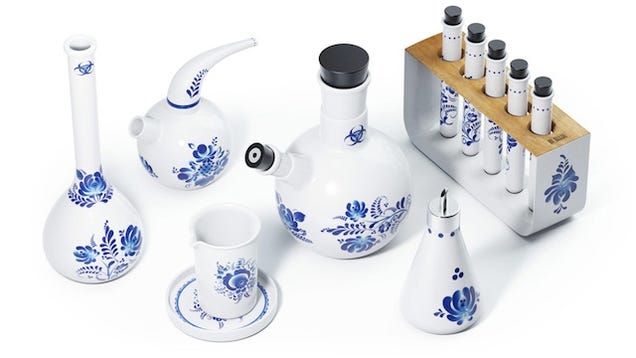
One of the ladies in my online "Writers Who Tea" group posted a link to this beautiful chemistry-themed tea set:


Which, sadly, is only a prototype and cannot be bought (yet). Oh, the cruelty.
Flasks!!

That's okay. I can build my own chemistry tea set, from ThinkGeek (as soon as they get some pieces back in....)!


Test tubes!

Beakers!
And, uh....  this TARDIS teapot:


Okay, so Doctor Who science mostly revolves around some good ol' hand-wave-ium (This is not the science you are looking for). Might as well admit it's all in writerly magic, really:

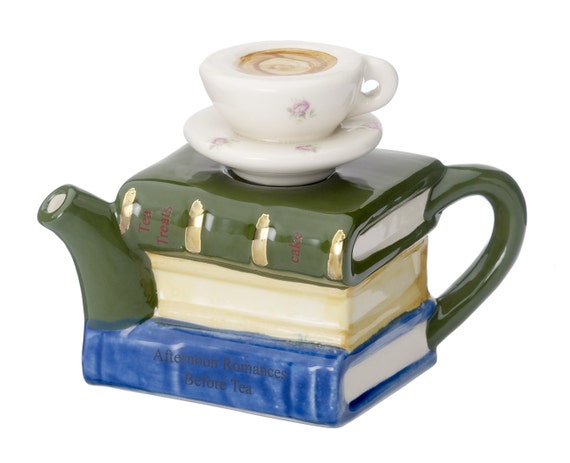
Writer Teapot on Etsy
Guess I'll have to hit the books to get a good science pun around here.

Too bad they're not textbooks? Etsy, of course.
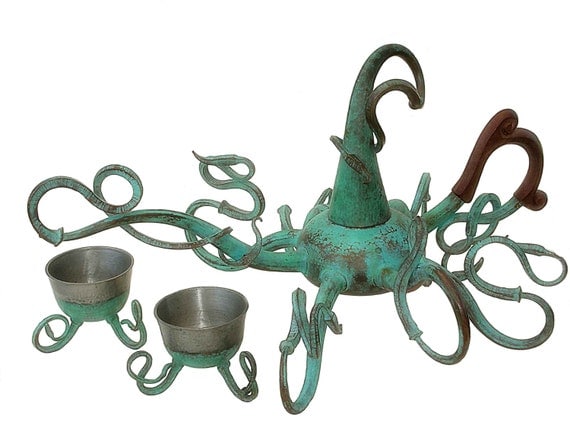
Anyway. Why not end the tea set with something to drool over, and something wonder "Who'd pay so much for that?" (I'll leave you to figure out which is which... ;)

On Pinterest

On Etsy

Monday, August 11, 2014

Caffeine in Tea: myths

Have you ever heard that steeping tea for 30 seconds will naturally decaffeinate tea?

Rooibos tea is naturally decaf,
if you're wondering.
(Not my favorite, though--
I have to add milk and sugar
before it's enjoyable, so
no actual health benefits for me.
)
I had, and I wanted to know if it was true. Based on the research I found (okay, online), this does not seem to hold up. Yes, some or much of the caffeine will be removed, but not enough that what remains could be considered decaffeinated.

I suggest reading through this guest post by Nigel Melican, founder of Teacraft, LTD, from Cha Dao. You'll find some very interesting statistics.

There's also a nifty experiment here, the Asbury College study, that further disproves the 30-second myth.

Furthermore, caffeine content of teas tends to be more reliant on the picking of the leaf than on the type of preparation (so some green teas would have more caffeine than some black teas).

Caffeine varies in the fresh green leaf depending on fineness of pluck. The fourth leaf (Coarse) has about one third less than the first leaf (Very Fine Pluck). Caffeine varies with type -seedling tea (3-5%) has perhaps twice that of clonal tea (1-3%).  
--http://nobleharbor.com/tea/caffiene.html 

Or switch to sparkling water.
That's decaf, too.
So there you have it: yes, you can reduce the caffeine in tea by steeping it for a short while, but there will still be caffeine in the brew. No, green tea isn't innately less caffeinated than black tea--you use less tea when steeping, and the manufacturing companies can manipulate the tea to have less caffeine, but that doesn't always happen.

In other words, look up the info for each individual tea if you're concerned about caffeine; and be aware even then the seller might have inaccurate information--safest bet is to assume your tea is caffeinated if it isn't a tisane (herbal tea) and treat it accordingly.

If you fully brew your first steeping (steeping it the recommended time for an actual brew), you should have a greatly reduced caffeine content. So if you're reducing caffeine content in your afternoon diet, use a tea that resteeps well; drink your first fully-caffeinated brew in the morning, and resteep your leaves in the afternoon. You might also drink decaf, or brew your first cup(s) for >5 minutes. But if you want to eliminate your caffeine content, you're probably better off switching to herbal.

(Oolongs, in my experience, tend to rebrew very well for several steepings--that would be my personal recommendation, if you like them.)

I suggest single-size servings, if that's your plan. 

Friday, June 6, 2014

Writing Tea 101

Have you thought about writing tea into your story? About having your reader be a perennial tea drinker?

If you're not a huge tea drinker, you might not know all the terms and tidbits. So here's a quick Tea 101 for Writers:

Bags vs sachet vs loose-leaf vs brew-your-own

Tea comes in a variety of presentations.

Tea bags: This is the lowest quality of tea of each tea leaf, being made of the smaller bits and pieces and dust of tea. That doesn't mean tea in tea bags is bad, and some brands are consistently excellent. It might be very good dust. It's the cheapest way to buy tea, and very convenient to prepare. The tea bags are usually flat, and can be round or square, have paper tags with strings to pull them out of the tea or lack strings and require rescuing with a fork. Even most picky tea drinkers will drink bagged tea if they don't have time for other forms, or if it's all that's available; there really are some very nice bagged teas, and it's convenient. I'd say the majority of American tea drinkers go with regular tea bags most to all the time. If your character is a casual tea drinker, give her bagged tea. Lipton and Bigelow (which have a variety of flavors) are the brands I most often find served in restaurants in the American South), with Numi a higher-end common brand (organic, and also often served at places going green). Few places serve more than one brand of tea.

Tea sachets: These look like tea bags, except that the teas tend to be whole-leaf: that is, instead of being the odds and ends of tea leaves, the entire tea leaf is in the bag, which gives a slightly higher quality of flavor. The sachets are also built with slightly more room for tea leaves to expand (i.e., they're bigger, and often pyramid-shaped, capable of standing on their own). Equally convenient, but slightly more expensive. Picky tea drinkers will usually drink these teas if offered the choice between sachets and tea bags, or if in a hurry, because convenience. The tea is usually higher-quality, and is often on par with mid-quality loose leaf tea. Occasionally companies will offer high-end teas in sachets, too. Like tea bags, sachets offer little to no cleanup.  "Two Leaves and a Bud" is the most common tea sachet I see served, although the Lipton sachets are growing more popular.

Loose leaf: This is tea that is served in a giant tin, and put into a tea bag, a tea ball, or a tea strainer for steeping. Or they can also be prepared with a variety of devices, or added straight to the pot and then the tea poured through a small sieve during serving so the drinker only gets tea. Loose leaf teas aren't necessarily the cream of the crop (they range from dirt-cheap to amazing), but the highest quality teas are usually sold only loose leaf, and most teas served loose leaf are good quality (if not necessarily to the tea drinker's taste). They're not locked into tea bags or sachets, so serving size isn't limited; this makes them ideal for brewing larger pots of tea (those using tea bags or sachets will put more than one bag into the pot instead). 

Loose leaf teas are usually preferred by picky tea drinkers, but this presentation requires more cleanup, as additional implements are required. Usually small bits of tea leaf end up in the tea. Experienced tea drinkers are likely to enjoy loose leaf tea, and most serious tea drinkers prefer loose leaf tea, but black teas are almost never served loose leaf in restaurants. Picky tea-drinkers may only drink loose leaf at home, or loose leaf with very select tea sachets. High-end Asian restaurants may serve loose-leaf-brewed green tea, but only occasionally will you get the portion with the leaves; Indian restaurants may serve loose-leaf-brewed spice or milk teas, but again, you're not likely to get any of the leaves used in the brewing.

Make-your-own: For the true tea aficionado, mixing her own tea will invariably come onto her bucket list. She may or may not regularly make her own tea, but it's probably something she's looked into. This may take the form of going to a tea blending shop and asking for a custom blend (many local tea shops will offer this option), or finding all-natural ingredients, preparing, and mixing them herself. (Angela Quarles does this--check out her blog for more on how.) Healthy-living lifestylists will also frequently make their own tea, and those who are interested in homeopathy. They may or may not include tea leaves in their blends (teas made without tea leaves, or herbal teas, are technically called tisanes). Make-your-own is inevitably a loose-leaf tea.


Types of tea

Tea comes in a variety of types. Any of these can be flavored with spices, flowers, fruits, etc.

White: This tea is completely unfermented. It brews a very, very pale yellow color. Brews at about 180F, for 2-5 minutes. Has a tendency to become bitter when steeped longer. I don't know anyone who prefers bitter white tea, although there's probably someone, somewhere, who does.

Green: like what you find in an Asian restaurant. It shades from a light green (powdered matcha, for which the tea leaves are powdered and mixed into the drink) to a pale gold (most types of green tea). Brews at about 170F, for 45 seconds-2 minutes, or left in the pot. Has a tendency to become bitter when steeped long. Some people prefer this.

Black: A fully fermented tea. Like what you find in most sweet teas, black iced teas, and "English" teas. It's fermented and contains caffeine. Brews at 190F for 3-5 minutes. Has a tendency to become bitter when steeped longer. Some people prefer this.

Oolong: Oxidized tea. You have to go looking for this tea; it's almost never offered at restaurants. But it's very good, and easy to find in tea-specific stores. It's closest to green tea, a light gold color, with a touch of the flavor of black tea. Brewed at 195F for 2-4 minutes. Characters of Chinese descent, experienced tea drinkers, and characters who are interested in health (high levels of antioxidants). 

Rooibos tea, aka "red tea" in America, without
milk or sugar.
Red/rooibos: made from the South African "red bush" plant, this tea is not caffeinated (at least not by the rooibos). Like herbal tea, it doesn't have any leaves of the tea plant, and depending on source may be linked with herbal teas or regular teas (since it does have a standard plant that goes into it). It has a different flavor than the tea leaf used for white, green, or black teas, since it's not from the same plant. (I personally prefer it prepared with milk and sugar, whereas I prefer white, green, and black teas plain).

Pu-erh: Fermented and oxidized tea. Sometimes called "the diet tea" because it's supposed to be good for weight loss (unsubstantiated in humans). It's sold in "bricks" of compressed leaves dried together that you can break off pieces and use as loose-leaf tea. Has a smokey flavor; somewhat similar to American black tea. Not a well-known tea in America, but an experienced tea drinker or a character on a diet might have some. Tea collectors or wealthy characters might have a very old brick of tea (10 years to over 100 years old). Brewed at 195-205F for 2-3 minutes.

Herbal: Not really tea because it doesn't contain actual leaves of the tea plant, it's a combination of spices, fruits, and herbs. Herbal teas have the most variety, since there are no hard-and-fast rules on what goes into them. People who are avoiding caffeine often drink herbal teas. Herbal teas are often also used for homeopathic medicine, or for simple wellness reasons, such as using ginger teas to settle the stomach, lavender tea to relax before bed, or fruit tea just to wean oneself off soda with a tasty but healthier alternative. Brewed at 212F-boiling for 4-5 minutes, but doesn't become bitter, so can continue to steep as long as desired.

Yerba Mate: (pronounced mah-te): Also contains no tea plant leaves, mate is instead made with leaves from the South American holly plant. It contains as much caffeine as coffee, so a non-coffee-drinking character who needs an extra boost might reach for some of this instead of soda or an energy drink. Also thought to promote weight loss and thought to have a couple of homeopathic benefits, but also has small amounts of some carcinogens (not thought to be dangerous when drunk in moderation). Brewed at 208F for 4-6 minutes.

Chai tea: Or more properly, Masala chai, but most Americans call it "chai tea." (This is a bit redundant, as "chai" literally means "tea.") A blend of spices (cinnamon, cloves, cardamon, ginger, and black pepper) and (usually) black tea, often prepared with sugar and milk. Originated from India. A character looking for something sweet and spicy might be drinking go for this ("chai latte" is what they might order in a coffee shop, and in most good coffee shops that will contain no coffee).

Numi Flowering teas, fully bloomed.
Blooming/flowering teas: Usually green or white teas with floral flavorings. Blooming teas are balls of tea leaves (and often flower petals) tied up and dried in balls, about the size of a largish marble. They're usually brewed in clear teapots, because the point of them is to watch the tea "bloom" as it opens; the tea is tied in a flower-like pattern. Not common and usually more expensive due to the artistry involved. Might be used by an experienced tea drinker, someone who is into meditation or zen, or someone looking to impress. Would not be available in most restaurants. A character who isn't into tea might think it looks unattractive or even frightening, since it's a bit unusual in appearance.

Stay tuned for Tea 102.

Monday, June 2, 2014

Tea Review: Coconut Oolong


Coconut Oolong


Reviewed by: Rebekkah
Type of tea

Oolong, loose-leaf
Aroma

Coconut, light oolong scent 
Where I got it

At Tea and Spice Exchange in Blowing Rock, NC.
You can find it online here, although apparently
this is a chain store, so you might be near a brick-and-mortar store.
Cost

$5.49/oz 
How I brewed it

Water from the coffee machine poured over 1.5 tsp in a 16 oz mug, steeped for about 2-3 minutes.
Rebrewing notes

Rebrews well for a second brew. It's an oolong, which you're supposed to rebrew multiple times anyway to get the "full oolong experience," which is another way of saying it's a great tea for re-steeping. Flavor holds up for at least 3 rebrews; I haven't gone past that yet. 
Review

Word of warning, if you don't like coconut, you'll hate it; and the coconut flavor is obtained by "artificial coconut flavor." But I do like coconut, and I find the taste of this tea fantastic. The coconut is more in the scent than the flavor--although it has a strong coconut smell, the taste of toasted coconut is rather light and mostly notable in the aftertaste.

In terms of flavor, it's a good-quality oolong tea, if not a particularly fancy one. It's pretty resilient; I've brewed it with both water too hot and too cool, and it turned out okay with the too hot, and fine with the water a bit too cool (a bit light on the first brew with cool water, but the second brew with normal-heated water was full flavored). It's got a bold-for-oolong flavor; the coconut seems to more enhance the natural oolong flavor than be tasted itself, and I think may contribute to the resiliency of the tea, covering up brewing mistakes that might otherwise taste bitter or flavorless.

If what you love about oolong is the scent, you'll miss it with this tea. It's one of the two things I dislike about this tea, but the coconut smell completely covers the rich oolong scent (the other thing: I'd have preferred real coconut to artificial). However, I like how it does smell almost as much, so there's that.

 Admittedly, I also hit up Asian food stores for my oolongs, so I'm a bit spoiled on prices and find it on the high end. However, although the price per ounce adds up, it's in line with Teavana, even a bit cheaper than most of the Teavana oolongs, so it's definitely not unreasonable. On the whole, I give it excellent scores for taste, resiliency, and ability to rebrew. If you re-steep your leaves, it's worth the price, and I would definitely recommend it. 

It won't give you a great idea of what oolongs in general taste like, but it's delicious and a unique tea for habitual oolong drinkers. If you want to buy another tea for a collection and can only buy one, compared to the Osmanthus Chin Hsuang, I'd definitely say go with the chin hsuang if you can find it, but you'll have a much easier time finding this one, and it's good enough you won't feel you're missing anything.


(Learning to Like Tea Part 1Part 2Part 3, Guest Post: Types of Tea, Guest post: Getting the Best Cup of Tea, Guest Post: How long to cool boiling water for your tea)

Monday, March 17, 2014

Tea Party at Straw Valley Cafe

This past weekend we had a bridal shower for one of my good friends. She's Scottish, so I wanted to do something tea. Only problem? Finding a venue to host. I tried a couple of places. The first place I looked had a reputation for poor service, and when I called I had the impression they couldn't (wouldn't) work with our budget of less than $500 for 15-20 people. The second place I checked with wanted to have  a headcount before they'd reserve the date (which, if you've ever tried planning an event, is the exact opposite of how people do things--it's hard to say for sure "I'll be there" when you don't know when it is!)

Then it occurred to me to try an old favorite, Straw Valley Cafe and Wine Bar. I've raved about them before; it's the same beautiful location our SciFi/Fantasy Meetup group used to meet (before we got too large to fit!).
Photo taken by one of the other bridesmaids--
The teacups were rather amazing!

Straw Valley just opened up a new restaurant facility. As in, last weekend. When I was booking, they were still in the planning stages to open, and I suspect we may have been the first outside event to book with, definitely the first tea party. They made sure to work with our budget and gave us some options on what we do with what we had. The rates were good; the base room fee was the same as the other venues I tried and the snack/drink costs reasonable.

And it was lovely. The tea was fantastic, loose-leaf Darjeeling with milk and honey. We had lemon-rosemary scones, and vanilla and lemon cupcakes with the most fantastic homemade whipped frosting, plenty for our 15 guests. The location is lovely, and the staff friendly, too.

 They put a lot of nice touches into getting the area ready, and I think the restaurant is going to be a success. They were fine with me starting to set up as soon as I arrived (admittedly it was only 15 minutes early).

View from the room where the bride opened her gifts.
I won't say the event went without hitch. It's a brand-new restaurant and they're clearly still figuring things out. We ran out of tea fairly quickly, and discovered they'd forgotten spoons for mixing with the milk and honey. Hunting someone to ask about this took a little effort, since everyone disappeared soon after we started serving ourselves tea from the cast-iron teapots. That said, as soon as I found someone they got right on it and we didn't run out of tea again, and someone was always nearby after that. Seemed like the sort of mistakes people make the first couple of events, and ones that didn't seem likely to be repeated at future events, given how courteous and helpful the staff has been in the past.
There was a fountain in the gift room.

You're best off scheduling late lunch hours for an event of this time, since they like to close around 4 to get ready for dinner. I would also recommend that anyone choosing to go with them come with signs prepared ahead of time--the venue is an oasis of calmness and beauty in the middle of downtown Durham, but to optimize this effect it's laid out in a manner that makes it seem larger than it is--with the unfortunate side effect that people can get lost wandering around.

On the whole I'd give the Cafe a 4 out of 5 stars, although I expect that will actually get higher as they gain experience hosting events. The baked goods were top-notch, the tea fantastic, the location beautiful, and staff helpful and eager to make sure things went well. There are a couple of kinks to work out, but I'd be surprised if the place isn't well-oiled by May.

Given the other options in the area, I'd definitely call it your #1 option for a tea party in the Triangle right now. Not bad for any other kind of bridal shower or party, either!

Monday, March 3, 2014

The Five Best Teas for Reading Fantasy

You probably know by now that I drink tea and read (and write) fantasy.

So obviously, it's time to combine them! What teas would I recommend for a evening with a fantasy book?

Since there are different kinds of fantasy, I've pulled out 3 well-loved subgenres. Here are my recommendations for teas to pair with each.

Swords and Sorcery Fantasy:

Magic, adventure, elves and monsters, in a world with little to no modern technology--you'll want the spice of adventure and twist of sweetness of exploring a new and fantastical world, something with a touch of caffeine to get your heart racing and your mind ready for anything. But you'll also want something mellow and down-to-Earth when you're ready to return to reality, such as nice black tea. That's why I'd say an orange spice black tea, such as Constant Comment or another similar tea, would be perfect for this read.


Urban Fantasy:

Urban fantasy is known for it's noir or dark fantasy feel. Whether it's a detective investigating the most elegant members of the seediest sides of town, or a vampire just trying to be human when his enclave is trying to take over the world, it's usually the darker parts of town where the characters edge out an existence. You'll want something dark and rich and smokey, and for that you'll find lapsang souchong, a Chinese smoked black tea, perfect with its mellow but smoky flavor.


Contemporary Fantasy:

Today's world is a quick-paced, action-filled place, and a reader will want something chic and modern. But contemporary fantasy is lighter than traditional urban fantasy, and so a hint of something sweet and pleasant is welcome. Therefore a jasmine green tea is the way to: green tea, fashionable for the on-the-go, business-minded modern person with an eye for health; and jasmine, for the sweet fragrance and reminder that not everything is cut-throat in the world.


Science Fantasy:

Think Star Wars--science fiction blended with fantasy. For this genre, the tone is adventure, speculation, what-if.

It's Earl Grey, all the way, the traditional tea of all things science fiction. Picard would proud. But more to the point, a rousing cup of Earl Grey is the perfect way to start an adventure, bracing you for anything that might come your way. With the logic of science and the endless possibility of fantasy, you'll need a hearty cup under your belt!


Paranormal Romance:

 Romance, magic, and usually the modern world: sweet with love and spicy with the touch of magic. This calls for a vanilla chai, with a healthy does of cream and sugar. The exotic spice of the chai will make magic in an ordinary world plausible, plus pair well with a zesty courtship; and the sweetness of vanilla will fill your heart like the story's inevitable happily-ever-after.


What kinds of teas would you recommend for different kinds of reading?

Wednesday, January 8, 2014

Favorite Teas of Other Authors

You know I love tea, but what about other writers? Turns out, I'm not alone. I've asked some other authors to share their favorite teas with me today, and what they love about them.


Favorite tea: Chai!
Carol A. Strickland
Author of Touch of Danger
Temporarily powerless, superhero Valiant must outrun a mercenary army across an otherwise deserted South Pacific island, accompanied by beautiful psychic Lina, who is acutely phobic to touch. What the world's greatest superhero asks for is what she's unable to give.

Her favorite tea: Chai
What she says about it:
"I couldn’t begin a day without a cup of chai; I’m addicted. I love the spice, the sweet, the latte! It may rack up more than a few Weight Watchers points, but it’s worth it. I drink Oregon Chai because the brand is fairly easily found, and a box of 8 packets still costs less than one Starbucks chai. (Though if you really need to wake up, Starbucks’ version is the way to go.)"


Debra Mullins
Favorite tea: English Breakfast!
Author of Prodigal Son
A bounty hunter descended from the ancient Seers of Atlantis uses his power to pursue criminals, but his latest case sends him in pursuit of a mystical stone from the legendary city, and a woman he can’t resist.

Her favorite tea: "English Breakfast"
She says about tea:
"I am solely a tea drinker, iced or hot. I don't care for most herbal teas and drink almost exclusively black teas. My grandparents came to the U.S. from Ireland, and I picked up their habit of drinking tea with milk and sweetener from my dad. That’s why I prefer the black teas. Herbal teas just can't stand up to all that stuff. And it has to be milk, not cream. I love Starbucks black iced tea, but for hot teas, my current favorite is English Breakfast. I also love Bigelow's Vanilla black tea and Constant Comment."


Rhett Bigler
Favorite tea: White Christmas Tree!
Author of Murder and Mochas
A fun genre mash-up, Murder & Mochas bounces a sarcastic and gritty detective off aliens and life in a small southern town to produce an amusing, page-turning mystery.

Favorite tea: White Christmas Tree
What he says about it: 
"My favorite tea is White Christmas Tea by Harney & Sons. For me this tea combines the sweet tingle of writing, with the cozy warmth of spending a winter’s day inside reading. It has an incredible almond and vanilla aroma that carries over to a delicate flavor. It’s the perfect accompaniment to a book (being written or read)."


Favorite tea: English Breakfast!
Cecilia Dominic
Author of The Mountain's Shadow
Recently fired Chronic Lycanthropy Syndrome researcher Joanie Fisher's inheritance has problems: disappearing children and sexy werewolves. Resuming her research will unravel the mysteries of Wolfsbane Manor, but she'll unearth painful secrets and risk the loss of love, friendship, and family. 


Her favorite tea: English Breakfast
What she says about it: "Call me boring, but I'm a fan of basic black English Breakfast tea. Yes, I like tea that tastes like tea. The good quality stuff doesn't need anything added to it and has a nice caffeine kick, strong but not bitter flavor, and often some floral notes. I usually have a cup every afternoon and like to pair it with something sweet if possible. And, of course, I like to have a cup nearby while I'm writing."


Favorite tea: Earl Grey!

Lorenda Christensen
Author of Never Deal with Dragons:
The first in a new series, a human mediator bites off more than she can chew when she agrees to partner with an ex-boyfriend to stop a war between two dragon monarchs.

Her favorite tea: "Earl Grey, hot"
She says about Earl Grey:
"Mostly because I'm a Star Trek fan, but I like the hint of orange in an otherwise normal cup of tea. Not to mention there are tons of desserts out there that use Earl Grey as a (yummy) ingredient. It's nerdy and tasty, all at the same time!"


Favorite tea: Mango!
DM Simpson 
Author of The Ties that Bind
Arriving in Boston after graduating college, unaware of what the future holds, Lyric walks through the doors of the Mainwaring Family Law Firm for her interview--her chance to escape her fears and find herself where no one knows who or what she is...or isn't.

Her favorite tea: PF Chang's mango tea
Why she loves it: "The flavor is very mellow. It reminds me of the time I spent in Dakar, Senegal, and had my first taste of the mango fruit!"


Fritz Freiheit
Favorite tea: Genmaicha!
Author of The Red Rook 
Penny would rather be appreciated for her brains than her powers. But when one of her school mates disappears, she'll have no choice but to take up the mantle of superhero. Because in The Red Rook, you don't get to choose which piece you are, only how you play the game.

His favorite tea: Genmaicha
He says about it: 
"Oh, so very difficult to choose a favorite tea! The first one to come to mind was Earl Grey (how cliché! but good), then simple black tea (because I drink so much of it), and green tea (a habit I picked up in Japan). I finally settled on a variation of green tea, called genmaicha, which is green tea mixed with toasted rice, for its rich, almost nutty flavor."


There you have it--no author is complete without his or her favorite tea! Have you tried any of these great brews? How'd you like them? And do you have any recommendations for the authors to try next?

Monday, August 12, 2013

Yosefa Tea: Love it!

When making my yearly trip to the NC mountains this past weekend (Boone, to be exact, home of my alma mater Appalachian), I visited the new shop Yosefa AntiquiTEA.

Loved it. Just loved it. It's decorated in Moroccan style, with draping curtains, cushioned seats on the floor by large golden low tables, intricately styled regular chairs, and comfy-looking lounging sofas. The idea is that you can order a teapot and sit around sipping tea.Two of my friends and I ordered two "tea for two"s (a single teapot has about 3 servings' worth of tea, as we discovered, so it's good for up to three if you've got less time). We then sat around for a couple of hours sipping tea and chatting.

Yep. That's what you're supposed to do.

You can also buy the teas to take home (I recommend the Mandarin Silk and the Halo, yum!) or blend your own at the blending bar. One of my friends did a white peony base with rosehips, lavender, calendula, and marigold petals. Quite lovely. And they have delicious-looking pastries, if you like something sweet with your tea.

I would love one of these shops in my hometown. Please?


Wednesday, May 1, 2013

I think we need more tea, roomie...

My new roommate and I both drink tea. When we combined our stashes, we realized we needed a larger place than our regular kitchen cabinets to store it. So we bought a stand-alone cabinet, and put all our tea in it.

There's still room in the drawer. Teavana time, right?
Well done, roommate. Well done. I think this is the start of a beautiful partnership.

Tuesday, March 5, 2013

Tea Time: Rooibos Cream Caramel


Rooibos Cream Caramel


Reviewed by: Juturna F.
Type of tea
Rooibos, loose-leaf
Flavor aspects and Aroma
Flavor Aspects: Natural
Aroma: Hot caramel
Where I got it
Tin Roof Teas
Cost
$8.17/100g
How I brewed it
3 teaspoons in a tea strainer in a cast iron pot. Water boiled in kettle until just whistling, then poured over leaves. Brewed 2-3 minutes, not timed.
Rebrewing notes
Haven't rebrewed.
Review


It brews a beautiful caramel color.
I've always found rooibos to be interesting teas. They taste vaguely fruity to me without tasting fruity (yes, I know that makes no sense!). This red tea brews a rich caramel color, and smells like caramel heated to the point of almost but not quite burnt (I think that's the "creme"), but doesn't taste like caramel. It's not dissimilar to black tea in taste, but lacks the bite of the tannins that give black tea the black tea taste, and is just a tad tangier. And that's the best I can describe it.

I feel like this tea would do very well with sugar, maybe a touch of milk or cream. It practically begs to be blended with other teas. I'd add it to an early grey, I think, to enhance the black tea scent, or a maybe a "sweet" tea like a chai or Teavana's Slimful Chocolate Decadence. On its own, I don't find it particularly extraordinary in terms of rooibos teas. It smells amazing, but the caramel flavor is almost unnoticeable as compared to regular rooibos tea.

Not quite as caramel-colored with
milk and sugar... But tastier!
I did add milk and sugar my second cup, and it much improved the flavor. Normally I dislike sweetening my tea, but in this tea it really balances it out. I highly recommend having milk and sugar at hand if you plan to drink this tea without blending it with something else.

Not my favorite tea, despite the smell. The scent sets up high expectations for the flavor, but the flavor falls short of the promise without sweetening it, and I like a tea that can stand on its own. On the other hand, sweetened it's actually quite good. I'd say it's best for blending with other teas. If you like fruity teas and black teas, but want to cut out the caffeine, rooibos might be a good match for you. Also, if you like Indian tea such as served at authentic Indian restaurants, you'll like this one.


Reviewed by:

No second review yet.
Type of tea Aroma
Where I got it Cost
How I brewed it Rebrewing notes
Review

Ack! Technical difficulties!


(Learning to Like Tea Part 1Part 2Part 3, Guest Post: Types of Tea, Guest post: Getting the Best Cup of Tea)


Getting a good picture of a teapot
is harder than you'd think.
 

Tuesday, February 26, 2013

Tea Time: Earl Grey Supreme


Earl Grey Supreme


Reviewed by: BecTea
Type of tea
Black, loose-leaf
Flavor aspects and Aroma
Flavor Aspects: Natural
Aroma: Rich and delightful
Where I got it
John Greenhow Store
Cost
$8.95 per 1/4 lb
How I brewed it
Just boiling water over a mesh tea basket. Steep 3 minutes. Sugar & milk added. For a single cup I used a tsp of loose leaves and 2 1/2 tbsp for a whole pot.
Rebrewing notes
Just as good as the first time, steeped twice as long.
Review
Earl Grey Lovers Unite! This is the smoothest Earl Grey I've had the pleasure of tasting. It was wonderful in the morning, made a refreshing tea with lunch, and was good cold with a little sugar when I had some left in the pot! It is a classic breakfast tea but I think it is delightful in the morning and all afternoon long. It is labeled as "an early 19th-century blend of fully fermented black teas with a tangy, pungent note introduced by bergamot orange oil."

I found it in Colonial Williamsburg, Va at the John Greenhow Shop. Do not lament! You can buy it online at Williamsbugmarketplace.com.

This tea does not disappoint! Get it online or start planning your road trip to VA because this tea is worth it.


Reviewed by:

No second review yet.
Type of tea Aroma
Where I got it Cost
How I brewed it Rebrewing notes
Review


(Learning to Like Tea Part 1Part 2Part 3, Guest Post: Types of Tea, Guest post: Getting the Best Cup of Tea)

Tea Time: Festivus


Festivus


Reviewed by: Juturna F.
Type of tea
Black, loose-leaf
Flavor aspects and Aroma
Flavor Aspects: Floral, Spicy
Aroma: Orange and Cloves
Where I got it
Tin Roof Teas (It's a holiday tea.)
Cost
Somewhere between $7-$10 for 250 grams (can't remember exactly)
How I brewed it
3 tsp in a tea strainer, hot water from the break room coffee machine poured in until 12oz mug full, steeped for 2 minutes.
Rebrewing notes
A little lighter colored on the second brew, not quite as strong in flavor. Didn't try a 3rd brew but I expect it wouldn't do well.
Review
I expected a darker brew from a black tea, but it's fairly light even on the first brew. But since it's got at least as much in the way of other ingredients as it does tea leaves, that's not entirely a surprise. There are actually dried orange peels in this one. Despite the poor rebrewing, it's a pretty good tea, with half the pleasure in the scent.

Spices include black tea, cinnamon, cardamom, cloves, and pink peppercorn; it also includes orange and apple pieces. I'm pretty certain the black tea is just so you can say it's caffeinated, because I barely taste the tea at all. However, I happen to like the smell of orange and spices, so I like this tea. If you enjoy fruity herbal teas or Bigelow's Constant Comment, you'd probably like this one, too. I honestly haven't tried the latter, so I can't tell you exactly how they compare.


Reviewed by:

No second review yet.
Type of tea Aroma
Where I got it Cost
How I brewed it Rebrewing notes
Review


(Learning to Like Tea Part 1Part 2Part 3, Guest Post: Types of Tea, Guest post: Getting the Best Cup of Tea)

Tuesday, February 19, 2013

Tea Time: POWER!!! tea


POWER!!! Tea


Reviewed by: BecTea
Type of tea
Herbal, loose-leaf
Flavor aspects
Natural
Where I got it
Thaumaturgy 777
Cost
$3
How I brewed it
The water was just before a boil; steeped 10 minutes. This was a loose leaf tea that requires a strainer or cotton reusable tea bag (I got one the same time I got the tea).
Rebrewing notes
Have not rebrewed yet.
Review
This is a specialty tea blend with unique ingredients like Sampson Snake Root and Licorice. It was advertised as spiritual tea: "This is a good, all-purpose tea, to attract good luck on all fronts of life. It's a good tonic for those engaging in the practice of magick and who want to increase their personal power, magnetism, chi, prana, or whatever you choose to call it." It sounded very intriguing!

I can say it isn't overpowering as far as the taste, even with the 7 different ingredients. It has a mellow flavor that has an earthy green tea quality, even though it's all herbs and has no tea in it. I added honey to ease the earthy, natural quality and it was quite nice. It has enough unique flavor (cinnamon tones maybe) to be a sipping tea versus a drinking tea.

As far as the spiritual aspect I'm not sure yet, but I did get a "get up and go" buzz from it and proceed to clean, clean, clean. In the meantime the tea cooled down and became even better, hinting that it might have lemon grass as an ingredient.

Recommended for a unique tea experience or as a tea for ritual presentation. Would be very lovely while enjoying a bath.


Reviewed by:

No second review yet.
Type of tea Aroma
Where I got it Cost
How I brewed it Rebrewing notes
Review


(Learning to Like Tea Part 1Part 2Part 3, Guest Post: Types of Tea, Guest post: Getting the Best Cup of Tea)